
How to Choose the Right Yarn for Your Knitwear Brand
How to Choose the Right Yarn for Your Knitwear Brand
Choosing the right yarn is one of the most important decisions when developing custom knitwear. The yarn affects not only the softness and appearance of a sweater, but also its warmth, weight, drape, durability, price and overall positioning in the market.
For clothing brands, choosing yarn should not simply be about selecting the most expensive or luxurious material. The right choice depends on your product design, target customer, season, price range, knitting gauge and expected order quantity.
As an experienced knitwear manufacturer, Xiamen Ainety Garments Co., Ltd. works with a wide range of yarns and blends to help brands develop knitwear that matches their product concept and market requirements.
1. Start With Your Product Positioning
Before choosing a yarn, first consider what you want the finished product to communicate.
Is it a lightweight everyday sweater? A warm winter knit? A premium cashmere collection? A children's sweater? Or a fashion-focused seasonal piece?
Different product positioning usually requires different yarn characteristics.
- Premium knitwear: Cashmere, fine wool, Merino wool and premium blends can provide a softer and more refined hand feel.
- Everyday knitwear: Cotton, wool blends and other practical yarn combinations can provide a balance between comfort, appearance and cost.
- Lightweight fashion knitwear: Fine yarns combined with higher-gauge knitting can create a lighter and more delicate fabric.
- Warm winter knitwear: Wool, cashmere and suitable wool blends can provide greater warmth and a fuller hand feel.
The goal is not to find one “best” yarn. The goal is to find the yarn that fits your product.
2. Consider the Fiber: What Material Is Right for Your Product?
Different fibers create different characteristics in the finished knitwear. Below are some common options used in sweater development.
Cashmere
Cashmere is known for its soft hand feel, lightweight warmth and premium appearance. It is often selected for higher-end knitwear collections where softness and luxury are important.
Cashmere can be suitable for premium sweaters, cardigans, scarves and other products where a refined hand feel is a key selling point.
Wool
Wool is a versatile choice for knitwear and is widely used for sweaters and winter garments. Depending on the fiber quality and yarn construction, wool can offer warmth, resilience and a structured appearance.
For brands developing seasonal or winter knitwear, wool can provide a practical balance between performance and product positioning.
Merino Wool
Merino wool is a popular option for brands looking for a finer and softer wool option. It can be used for lightweight sweaters, fine-gauge knitwear and other styles where comfort and a clean appearance are important.
Cotton
Cotton is commonly used for lightweight and transitional-season knitwear. It can be a good choice for spring, summer and early autumn collections, depending on the yarn construction and knitting structure.
Blended Yarns
Blended yarns combine different fibers to achieve a balance of characteristics. For example, a wool blend may be developed to balance warmth, softness, durability and cost, while a cotton blend may provide a different combination of comfort and appearance.
For many commercial knitwear collections, a suitable blend can be a practical solution when a brand needs to balance product performance and target pricing.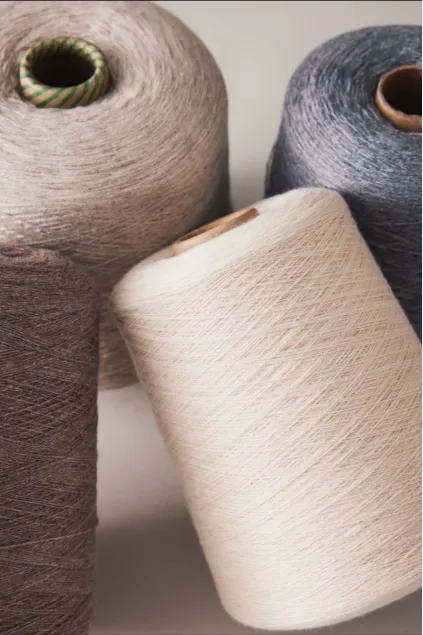
3. Think About the Season and Climate
The same knitwear design can require different yarn choices depending on the target market and selling season.
For cold-weather collections, brands may prefer warmer and fuller yarn constructions. For spring and transitional collections, finer yarns and lighter knitting structures can create a more comfortable and versatile garment.
When developing products for different countries, it is also useful to consider the local climate. A sweater designed for a cold European winter may require a different yarn and fabric weight from one intended for a mild autumn market.
Therefore, yarn selection should always be considered together with the target market and final product use.
4. Yarn Is Only One Part of the Final Fabric
One important point that is sometimes overlooked is that the final appearance of a sweater does not depend on yarn alone.
Yarn + knitting gauge + stitch structure + garment construction all work together to determine the final fabric.
For example, the same yarn can produce very different results when knitted at different gauges or with different stitch structures.
Fine-gauge knitting can create a lighter and cleaner appearance, while heavier-gauge knitting can produce a thicker and more substantial fabric.
This is why experienced knitwear manufacturers usually evaluate yarn selection together with the intended gauge and knitting structure during product development.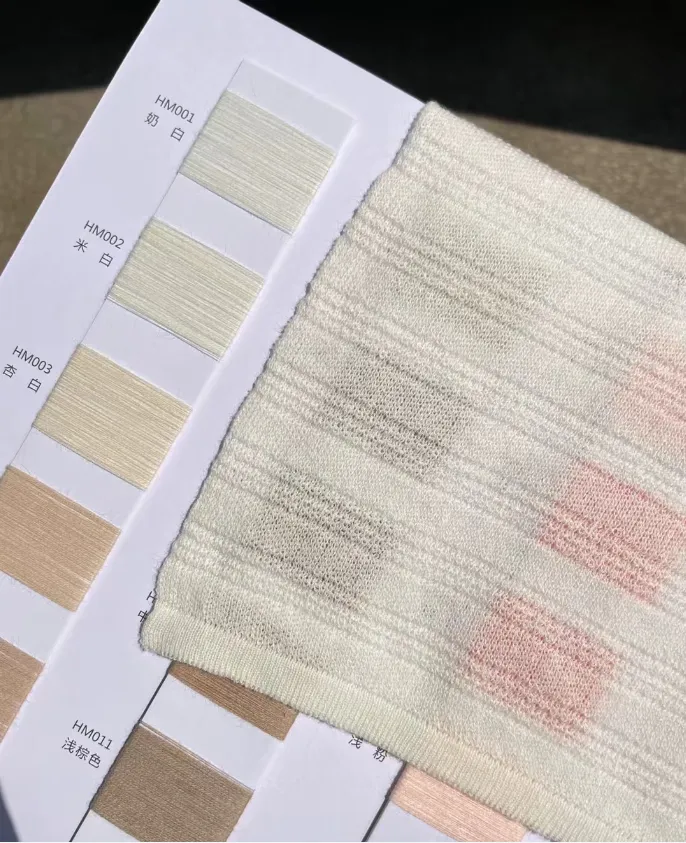
5. Consider the Target Price
For a clothing brand, yarn selection also needs to fit the target product cost.
Premium fibers can provide excellent hand feel and product positioning, but they may also increase the overall manufacturing cost. On the other hand, a carefully selected blend may achieve the desired appearance and performance while keeping the product within the target price range.
When requesting a quotation from a knitwear manufacturer, it is helpful to provide your target material, approximate quantity, preferred gauge and product specifications. This allows the manufacturer to recommend a more suitable yarn option instead of simply quoting based on a generic sweater specification.
6. Consider the Quantity and Production Requirements
Your expected order quantity can also influence the yarn selection and development process.
For small and medium-sized brands, flexibility is often important. You may want to test a new design with a smaller initial order before committing to larger production volumes.
At Ainety, our MOQ starts from 50 pieces per color per size, allowing brands to develop and test knitwear collections with relatively small quantities.
For larger orders, yarn availability, color matching, production planning and delivery requirements become increasingly important. These factors should be discussed with your manufacturer before production begins.
7. Always Check the Yarn Before Bulk Production
Before moving into bulk production, we recommend confirming the yarn and fabric through sampling.
A professional sample development process can help brands evaluate:
- Hand feel and softness
- Fabric weight and thickness
- Stretch and recovery
- Color appearance
- Knitting structure
- Overall garment fit and appearance
For brands developing a new collection, this step is especially important because the yarn may look different as a cone or swatch compared with the finished knitted garment.
8. Work With Your Manufacturer on Yarn Selection
You do not always need to decide on the final yarn by yourself.
An experienced knitwear manufacturer can evaluate your design, target price, market and desired hand feel, then suggest suitable yarn options for development.
At Ainety, our development team works with different yarn compositions and knitting gauges to support customized OEM and ODM knitwear projects. We can help brands evaluate yarn options during the sampling stage and adjust the fabric according to the desired look and feel.
Our production capabilities cover a wide range of knitting gauges, allowing us to develop different types of knitwear from lightweight fine-gauge styles to heavier knitted garments.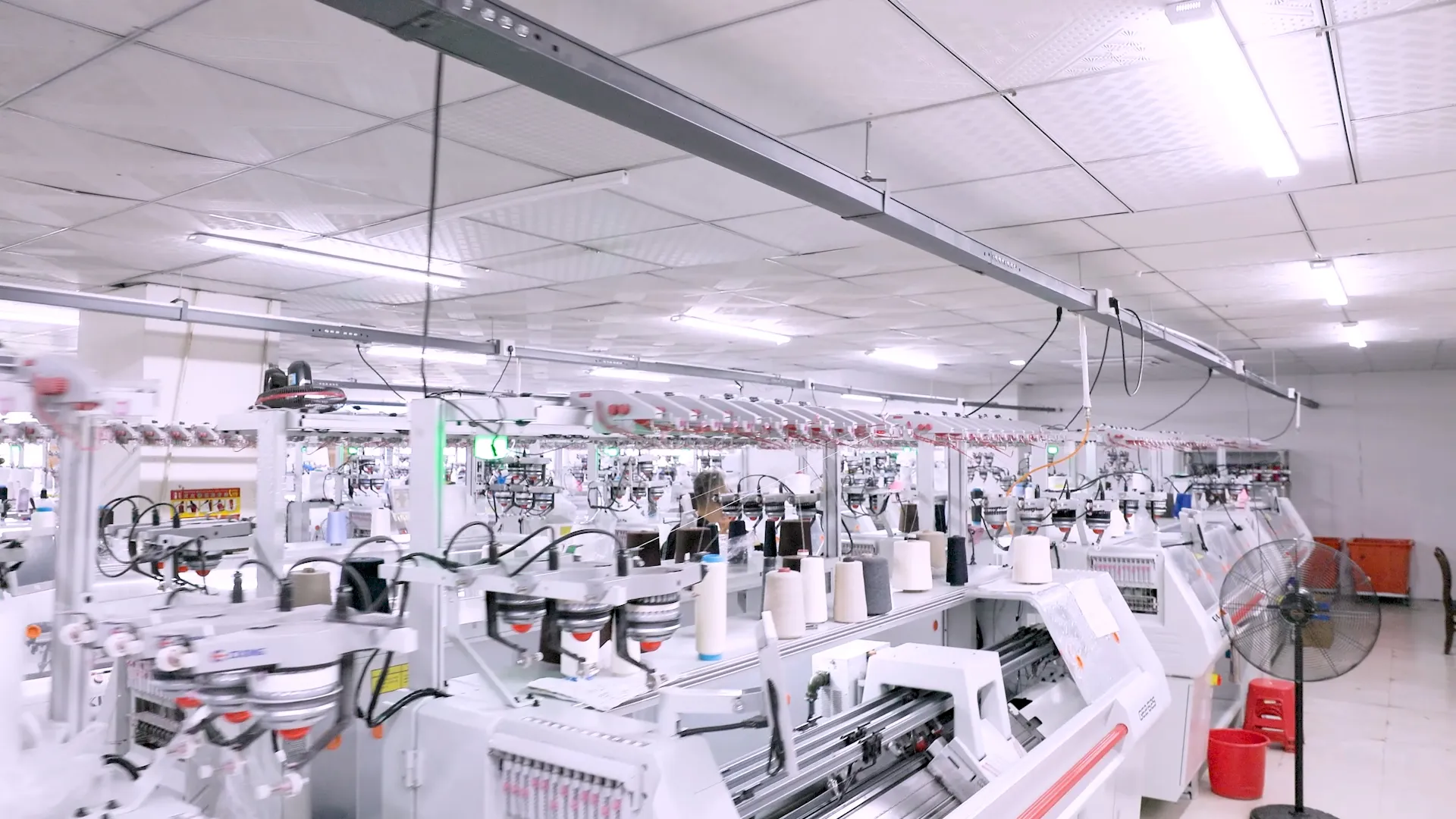
9. A Simple Checklist for Choosing Yarn
Before confirming your yarn, consider these questions:
- What is the target market and climate?
- Is the product positioned as premium, mid-range or everyday knitwear?
- What hand feel do you want?
- Does the product need to be lightweight or warm?
- What is your target price?
- What knitting gauge and stitch structure will be used?
- What is your expected order quantity?
- Can the yarn be consistently sourced for bulk production?
- Has the yarn been tested through an actual knitted sample?
Answering these questions before production can help reduce unnecessary sampling and make communication between the brand and manufacturer much more efficient.
Final Thoughts
There is no single yarn that is perfect for every knitwear product.
The right yarn depends on the combination of product positioning, target market, season, hand feel, knitting gauge, design, target price and production requirements.
For clothing brands, the best approach is to define the product requirements first and then work with an experienced knitwear manufacturer to evaluate suitable yarn options.
At Xiamen Ainety Garments Co., Ltd., we provide OEM and ODM knitwear manufacturing for brands and wholesale partners, with experience in cashmere, wool, Merino wool, cotton and blended yarn development.
If you are developing a new sweater or knitwear collection and are not sure which yarn is suitable for your design, feel free to contact us and share your design, target quantity, preferred material or target price. Our team can help you evaluate suitable options for sampling.